
Passchendaele Parent Guide
Parent Movie Review
War movies about Americans may be a dime a dozen, but it is a rare thing indeed to find depictions of Canadian patriotism. This gaping void alone offers good reason to believe a film by writer/director/actor Paul Gross about a horrific battle waged by his countrymen on Belgium soil will play well in his homeland.
Inspired by his grandfather’s involvement in the historic struggle, Gross takes on the role of Michael Dunne, a soldier who has been sent home to Calgary, Alberta after suffering from a mix of heroism and emotionally motivated savagery on the battlefield. Diagnosed with shell shock, Michael is assigned to work at the local recruiting office under the direction of British officer Randolph Dobson-Hughes (Jim Mezon), a hardheaded man who views Dunne’s condition with contempt.
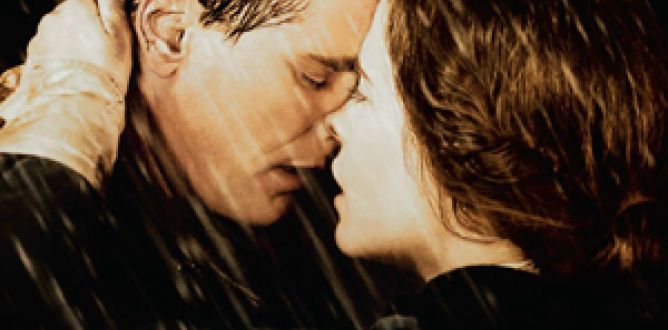
Also brewing is a romance between the soldier and a beautiful nurse who attended his war wounds. But Sarah Mann (Caroline Dhavernas) comes with additional baggage unknown to Michael. Along with a secret morphine addiction, Sarah has German ancestry that puts her and her family in an unpopular class within their frontier community. Nevertheless, the relationship continues to develop.
Sarah’s brother David (Joe Dinicol) however is not faring as well. Not only is his heritage a problem, but the young man also suffers from asthma, barring him from enlisting in the conflict. Desperate to prove his allegiance to his young country, David begs Michael (against his sister’s wishes) to sign him up for active service.
Predictable turns of fate and a heavy dose of coincidence drive the plot into the third act where all the principal characters find themselves in the trenches, defending the village of Passchendaele. It’s a muddy fight that, in reality, resulted in 16,000 Canadian casualties, with 5,000 deaths.
Yet for all this carnage, Gross does what Canadians are famous for in that he stops short of giving us the moment of patriotic pride we may be hoping for.
Perhaps that is fair enough. War is horrific and obviously Gross wants that to be the real message. However he doesn’t shy away from other distractions, which may catch history-seeking parents (and eager teachers) by surprise. These include detours into heady romantic encounters where one young couple jumps at the chance to have sex (brief male and female nudity are seen), and another pair finds a moment on the sidelines of the battlefield (their sensuous sounds manage to hover over the blasts). Profanities are also frequent, as well as several sexual expletives.
As a filmmaker, Gross went to great pains to ensure the battlefield and tools of war were historically precise. This attention to detail helps to create an emotionally charged sense of just how bad the situation was. Unfortunately, the generous addition of fictitious fluff leaves one wondering why so much priority was placed on passion versus Passchendaele.
Starring Paul Gross, Caroline Dhavernas, Joe Dinicol, Meredith Bailey.. Running time: 114 minutes. Theatrical release October 17, 2008. Updated February 4, 2010About author

Passchendaele
Rating & Content Info
Why is Passchendaele rated Not Rated? Passchendaele is rated Not Rated by the MPAA
This film doesn’t shy away from the atrocities of war and has many scenes of action with bodies strewn across a battlefield. Corpses with missing limbs and heads are depicted. Injured men with dismembered limbs and other major injuries are shown. Many people are seen being shot or hit with other artillery on screen. Sexual content includes two encounters between unmarried couples with consequences of pregnancy or other issues. One includes female topless nudity and male rear nudity. The other shows implied sexual activity with sounds. Frequent profanities are heard, including several sexual expletives, scatological and other profanities, and terms of Deity. A character is seen injecting a medicinal drug into her leg—later she is shown in physical distress while overcoming her addiction. Frequent cigarette smoking is shown in this period film and soldiers discuss the importance of having a cigarette to relieve battlefield stress. A man drinks from a flask and social drinking is shown.
Page last updated February 4, 2010
Passchendaele Parents' Guide
Why do you think so few films have been made about Canada’s involvement in various wars? Are there other places where this military history can be found? How does the knowledge or an ignorance of these sacrifices and achievements affect a feeling of patriotism?
For more details on the real story of Passchendaele, check this movie’s website: www.passchendaelethemovie.com.
Home Video
The most recent home video release of Passchendaele movie is February 3, 2009. Here are some details…
Passchendaele is releasing on Blu-ray disc on February 3, 2009.
Related home video titles:
The movie Flyboys is based on the true experiences of a group of young Americans that volunteered with the French military during World War I. Tora! Tora! Tora! recalls the story of the attack on Pearl Harbor from both the American and Japanese points of view.